Table of Contents
ToggleLiving rooms vs family rooms, what’s the actual difference? Many homeowners use these terms interchangeably, but they describe two distinct spaces with different purposes. A living room typically serves as a formal area for entertaining guests. A family room functions as a casual space for daily activities and relaxation. Understanding these differences helps homeowners make smarter decisions about layout, furniture, and décor. This guide breaks down what defines each room, how they differ in design and function, and how to choose the right space for any home.
Key Takeaways
- Living rooms serve as formal spaces for entertaining guests, while family rooms are casual, everyday gathering areas designed for comfort.
- When comparing living rooms vs family rooms, furniture choices differ significantly—living rooms prioritize elegance, while family rooms focus on durability.
- Family rooms emerged in the 1950s-60s to give families a relaxed space where they could enjoy daily activities without worrying about the “good” furniture.
- Smaller households or those with limited space can create a hybrid living-family room that balances style and functionality.
- Your entertaining style and daily habits should guide whether you need separate living and family rooms or one multipurpose space.
- In open floor plans, strategic furniture placement can create distinct zones that serve both formal and casual purposes.
What Defines a Living Room
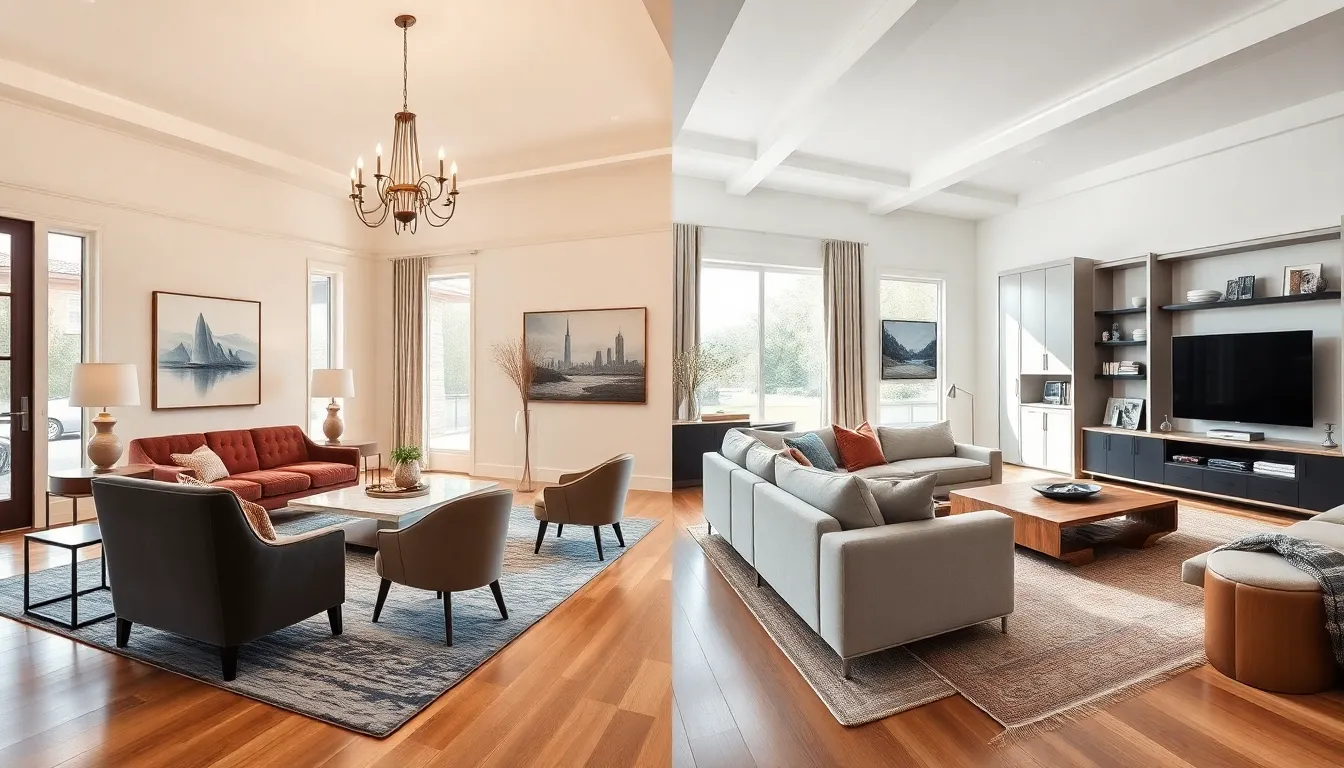
A living room is traditionally the most formal space in a home. It sits near the front entrance and serves as the primary area for welcoming guests. Living rooms prioritize aesthetics and presentation over everyday comfort.
Historically, living rooms replaced the “parlor” in American homes during the early 20th century. The space retained its formal function. Families reserved it for special occasions, holidays, and hosting visitors. This tradition continues in many homes today.
Key Characteristics of Living Rooms
- Location: Typically near the front door or main entrance
- Purpose: Formal entertaining and guest reception
- Furniture: Elegant sofas, accent chairs, and decorative pieces
- Usage frequency: Less daily use: reserved for occasions
- Design focus: Visual appeal and sophisticated décor
Living rooms often feature higher-end furniture that prioritizes style over durability. Homeowners might choose delicate fabrics, antique pieces, or designer furniture. The room showcases the home’s aesthetic identity.
In living rooms vs family rooms comparisons, living rooms tend to have stricter rules. They’re the “no food or drinks” zones in many households. Kids might be discouraged from playing there. This keeps the space pristine for visitors.
Modern living rooms have evolved somewhat. Open floor plans have blurred traditional boundaries. Still, many homeowners maintain a dedicated living room that feels more polished than other spaces in the home.
What Defines a Family Room
A family room is the casual, everyday gathering space in a home. It’s where families actually spend most of their time together. Comfort and functionality take priority over formality.
Family rooms emerged in American homes during the 1950s and 1960s. Suburban expansion created larger houses with space for multiple gathering areas. Families wanted a room where they could relax without worrying about messing up the “good” furniture.
Key Characteristics of Family Rooms
- Location: Often near the kitchen or at the back of the house
- Purpose: Daily relaxation, entertainment, and family activities
- Furniture: Comfortable sofas, recliners, and durable pieces
- Usage frequency: High, used daily by all family members
- Design focus: Comfort, practicality, and entertainment
Family rooms accommodate real life. They feature stain-resistant fabrics, sectional sofas built for lounging, and entertainment centers. The TV usually lives here. So do gaming consoles, toy storage, and bookshelves.
When comparing living rooms vs family rooms, family rooms win on livability. They’re designed for movie nights, assignments sessions, and lazy Sunday afternoons. Pets are welcome. Snacks happen. Life gets messy, and that’s okay.
The family room connects to daily routines. Its proximity to the kitchen makes it convenient for multitasking. Parents can cook dinner while keeping an eye on kids. It functions as the home’s true center of activity.
Design and Functionality Differences
The living rooms vs family rooms distinction becomes clearest when examining design choices and intended use. Each space serves a different role, and their design reflects those purposes.
Furniture Choices
Living room furniture emphasizes elegance. Homeowners select pieces that make visual statements, a velvet sofa, mid-century modern chairs, or a marble coffee table. These items look beautiful but might not survive a toddler’s juice spill.
Family room furniture prioritizes durability and comfort. Performance fabrics, oversized sectionals, and storage ottomans work well here. The furniture handles daily wear without showing damage quickly.
Layout and Traffic Flow
Living rooms often feature symmetrical arrangements. Two sofas facing each other, matched side tables, and a central focal point create formal balance. The layout encourages conversation.
Family rooms favor flexible, activity-focused layouts. Seating orients toward the television or fireplace. The arrangement accommodates multiple activities simultaneously, someone watches TV while another reads.
Décor and Accessories
Living room décor tends toward curated collections. Art pieces, decorative objects, and carefully chosen accents create a polished look. Every item feels intentional.
Family room décor allows more personality and practicality. Family photos, children’s artwork, and functional items blend with decorative pieces. The space reflects real life rather than a magazine spread.
Technology Integration
Living rooms often hide or minimize technology. Some homeowners skip TVs entirely in formal living spaces. Others use art TVs or concealed screens to maintain aesthetic standards.
Family rooms embrace technology openly. Large-screen TVs, sound systems, and charging stations serve daily entertainment needs. The room functions as a media hub.
Lighting Approaches
Living rooms use layered lighting for ambiance, chandeliers, table lamps, and accent lighting create mood. Family rooms need practical lighting for various activities, including task lighting for reading and overhead fixtures for general use.
How to Choose the Right Space for Your Home
Deciding between living rooms vs family rooms, or whether to have both, depends on several factors. Household needs, home size, and lifestyle all influence this choice.
Consider Your Household Size
Small households or couples without children might need only one gathering space. A combined living-family room works well. Larger families often benefit from separate spaces that serve different purposes.
Evaluate Your Entertaining Style
Homeowners who frequently host formal gatherings might prioritize a dedicated living room. Those who prefer casual get-togethers can focus resources on a comfortable family room instead.
Assess Your Home’s Layout
Not every floor plan accommodates both rooms. Smaller homes or apartments typically have one main gathering space. Homeowners must decide whether to design it as formal or casual, or find a middle ground.
Think About Daily Habits
How does the household actually use space? If everyone gravitates to one room regardless of its intended purpose, that signals how to prioritize. Design should support real behavior, not ideal scenarios.
Budget Considerations
Furnishing two separate gathering spaces costs more than outfitting one. Homeowners with limited budgets might create one versatile space rather than two underfurnished rooms.
The Hybrid Approach
Many modern homes blend living rooms vs family rooms into a single multipurpose space. This approach works especially well in open floor plans. Careful furniture selection and strategic zones can create areas that feel both polished and comfortable.
Some homeowners designate one end for formal seating and another for casual lounging. Others swap furniture seasonally, bringing out elegant pieces for holiday entertaining and returning to comfortable items afterward.