Table of Contents
ToggleVehicle break-ins and vandalism cost Americans billions annually, and your parked car is vulnerable when you’re not around. A car camera security system bridges that gap, recording everything from parking lot dings to attempted theft, even when the engine’s off. Unlike basic dashcams that only run while driving, these systems offer 24/7 monitoring, motion alerts, and cloud storage. Whether protecting a daily driver or a project vehicle, installing a car security camera gives peace of mind and solid evidence if something goes wrong. Here’s what to know before buying and installing one.
Key Takeaways
- A car camera security system offers 24/7 parking mode monitoring with motion and impact detection, unlike basic dashcams that only record while driving.
- Prioritize resolution (1080p minimum for fronts, 4K for detail), night vision technology (low-light sensors outperform IR for outdoor parking), and field of view (140–170° for front coverage) when selecting a car security camera.
- Hardwired installation with low-voltage cutoff protection prevents battery drain; connect to both constant power and ignition-switched circuits via your vehicle’s fuse box for optimal parking mode functionality.
- Test night vision footage under varied lighting conditions before relying on the system, ensuring license plates remain legible at 15–20 feet in front and 10 feet behind.
- Proper cable routing, clean mounting surfaces, and correct fuse selection prevent common installation failures; professional installation ($75–$200) is recommended if you’re uncomfortable with electrical work.
- Cloud storage subscriptions ($5–15/month) combined with local microSD cards (128GB–256GB) provide both immediate access and long-term evidence archiving for theft, vandalism, or accidents.
What Is a Car Camera Security System and How Does It Work?
A car camera security system is a dedicated video recording setup that monitors a vehicle during both driving and parking. Unlike traditional dashcams that shut off with the ignition, these systems draw power continuously from the car’s battery or a separate hardwired connection to capture activity 24/7.
Most systems include front and rear cameras (sometimes interior-facing as well), with resolutions ranging from 1080p to 4K. Video is stored locally on a microSD card or uploaded to cloud storage via built-in LTE or Wi-Fi connectivity. Some models offer dual storage, buffering footage locally while syncing critical clips to the cloud.
The core difference is parking mode. When the vehicle is parked and locked, the camera enters a low-power state, activating only when motion, impact, or tampering is detected. An internal G-sensor (accelerometer) triggers recording if someone bumps the car, breaks a window, or even leans against it hard enough.
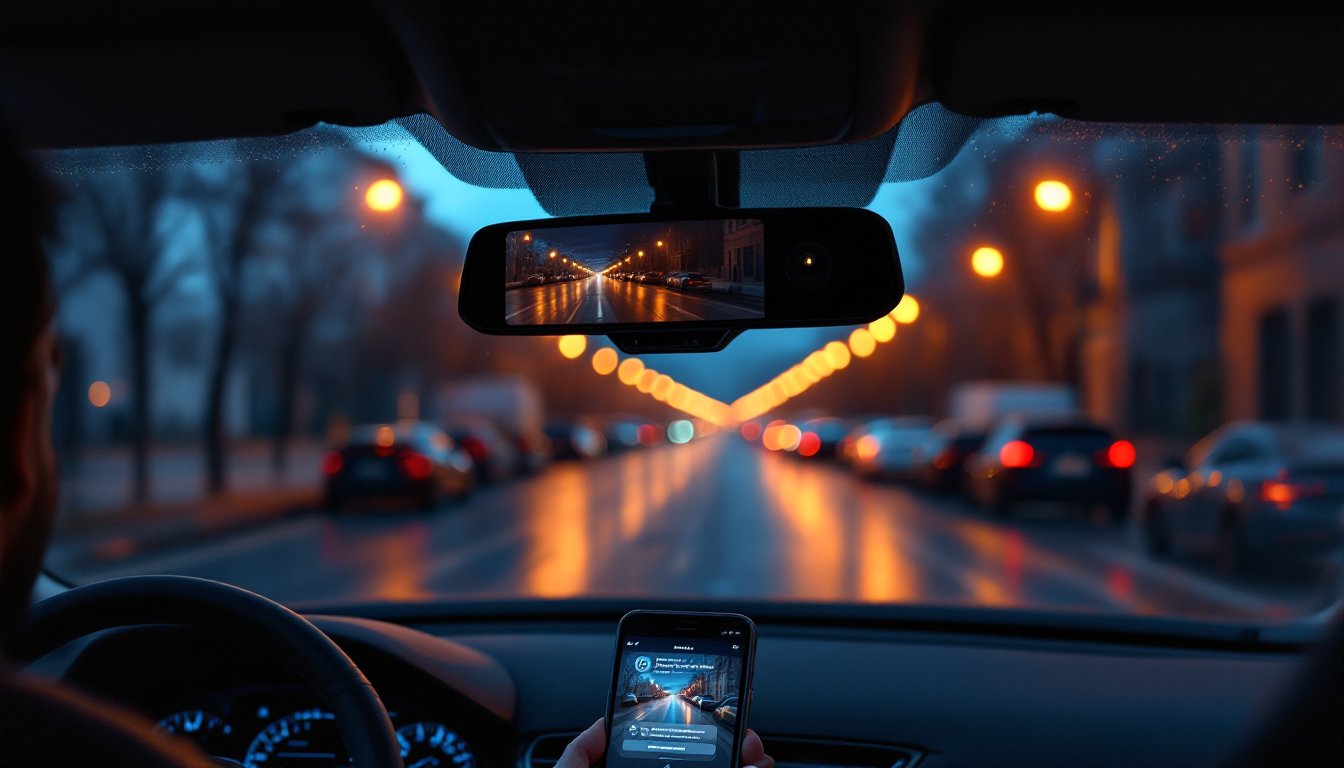
High-end units send push notifications to a smartphone app when an event occurs, allowing the owner to view live footage or review recorded clips remotely. Systems with GPS log location and speed, useful for fleet tracking or recovering a stolen vehicle. Testing by Digital Trends found that models with LTE connectivity and instant alerts outperformed Wi-Fi-only units in real-world security scenarios.
Power management is crucial. Cameras typically use a low-voltage cutoff to prevent draining the car battery below a safe threshold (usually 12.0V for a 12V system). Hardwired installations connect to the fuse box with an add-a-fuse tap, pulling constant power and ignition-switched power. Some users add a dedicated battery pack to extend parking mode without risking a dead starter battery.
Key Features to Look for in a Car Security Camera
Not all car cameras are built for security duty. Here’s what separates a true security system from a basic dashcam.
Resolution and frame rate matter for capturing license plates and faces. Look for at least 1080p at 30fps for the front camera: 4K (2160p) is better for detail but requires larger storage cards. Rear cameras often run at 720p or 1080p, which is adequate for coverage.
Field of view (FOV) determines coverage area. A 140–170° FOV is standard for front cameras: wider angles reduce blind spots but can distort edges. Dual-camera setups cover front and rear: some add cabin cameras for rideshare drivers or theft monitoring.
Storage capacity dictates how much footage you can keep. A 128GB or 256GB microSD card (Class 10 or UHS-I) is recommended. Calculate coverage time: 1080p footage uses roughly 6–8GB per hour, so a 128GB card stores about 16–20 hours before looping. Cloud storage subscriptions (typically $5–15/month) archive key clips indefinitely.
Connectivity options include Wi-Fi (for app access when parked nearby) and LTE (for remote viewing anywhere). LTE models require a data plan, often bundled by the manufacturer. GPS adds location tracking and speed stamps to footage.
Durability and operating range are non-negotiable. Cameras must handle -4°F to 140°F or wider: interior car temps can exceed 160°F in summer sun. Capacitor-based power (versus lithium batteries) tolerates heat better and avoids battery swelling.
App quality varies widely. Look for reviews confirming stable connectivity, intuitive controls, and fast clip downloads. Poor app design ruins otherwise solid hardware.
Parking Mode and Motion Detection
Parking mode is the flagship feature of a car security camera. When enabled, the camera remains powered after the ignition shuts off, entering a standby state that consumes minimal power (typically 0.02–0.05A).
There are three common trigger types:
- Motion detection uses pixel changes in the frame to start recording. Works well for spotting people approaching the car but can trigger on passing shadows or tree branches.
- Impact detection relies on the G-sensor to record when a physical jolt occurs, door dings, bumper taps, or break-ins. Less prone to false alarms than motion.
- Time-lapse mode captures one frame per second continuously, compressing hours into reviewable minutes. Uses more power and storage but ensures nothing is missed.
Many systems combine all three, letting users customize sensitivity thresholds. Set motion detection too high and every bird triggers a clip: too low and you miss a prowler.
Low-voltage cutoff is essential. Most cameras allow setting a cutoff point (e.g., 12.2V, 12.0V, or 11.8V for 12V systems) to prevent battery drain. If the car sits unused for days, even a low draw can leave you stranded. Some installers add a battery monitor or dedicated lithium jump pack hardwired to the camera for extended parking mode without tapping the starter battery.
Reviews on CNET highlighted systems with smart parking modes that adapt recording length based on battery voltage, maximizing coverage without risking a no-start.
Night Vision and Video Quality
Most vehicle incidents happen after dark, so night vision capability is non-negotiable. Car cameras use two primary technologies:
- Infrared (IR) LEDs illuminate the scene with invisible light. Effective range is typically 10–15 feet. IR works well for cabin monitoring but struggles outdoors where there’s no reflective surface.
- Low-light sensors (like Sony STARVIS or similar CMOS chips) amplify available light from streetlamps, headlights, and moonlight. These produce color or black-and-white footage without active illumination and are far superior for outdoor parking mode.
The best systems use HDR (High Dynamic Range) or WDR (Wide Dynamic Range) processing to balance bright headlights and dark shadows in the same frame. Without HDR, headlights blow out into white blobs, obscuring license plates.
Frame rate affects clarity in motion. At 30fps, fast-moving objects (like a fleeing vandal) appear smooth. Lower frame rates (15fps) save storage but introduce choppiness that can obscure details.
Test footage at night before relying on a camera. Park under varied lighting, streetlamp, pitch dark, parking garage, and review playback. License plates should be legible at 15–20 feet in front and 10 feet behind. If characters blur or bloom, the camera won’t help when it matters.
Installation Tips for DIY Car Camera Setup
Installing a car security camera ranges from plug-and-play simple to moderately complex hardwiring. Here’s how to do it right.
Tools and materials needed:
- Car camera kit (camera, mounts, cables)
- Trim removal tools (plastic pry tools prevent scratching)
- Wire crimpers and electrical tape or heat-shrink tubing
- Add-a-fuse tap (if hardwiring: match your fuse box amperage)
- Multimeter (for finding constant and switched power)
- Cable clips or adhesive wire channels for clean routing
- Microfiber cloth and isopropyl alcohol (for mounting surface prep)
Safety first: Disconnect the negative battery terminal before working with fuse boxes or wiring. Wear safety glasses when working overhead: trim clips can pop loose. Work in a well-ventilated area if using adhesives.
Step-by-Step Installation
-
Plan camera placement. The front camera typically mounts behind the rearview mirror, centered in the windshield. This hides it from view and captures the road without obstructing the driver. Rear cameras mount on the rear windshield (sedans/coupes) or hatch glass (SUVs/wagons), centered and high for maximum coverage. Avoid blocking defroster lines.
-
Clean mounting surfaces. Use isopropyl alcohol and a microfiber cloth to remove oils, dust, and protectants. Adhesive mounts fail on dirty glass. Let surfaces dry completely.
-
Route power cables. For 12V plug installations (cigarette lighter), run the cable along the headliner edge, down the A-pillar, and to the power port. Tuck cables under trim using plastic pry tools, never force metal tools, which can crack clips. For hardwired installations, route the cable to the fuse box (usually under the dash, driver’s side). Use an add-a-fuse tap to connect to a constant power circuit (for parking mode) and an ignition-switched circuit (so the camera knows when the car is on). Consult your vehicle’s owner’s manual or a fuse diagram to identify correct circuits. Common constant power sources: dome light, radio memory. Common switched sources: accessory, radio power.
-
Connect the camera. Plug in power and video cables per the manufacturer’s instructions. If installing a two-camera system, run the rear camera cable along the headliner, down the B- or C-pillar, and under trim panels to the back. This is the most time-consuming step. Secure cables with clips every 12–18 inches to prevent rattling.
-
Set low-voltage cutoff. Access the camera’s settings (via app or on-screen menu) and configure the parking mode cutoff voltage. A safe setting for most vehicles is 12.0V to 12.2V. If you drive infrequently or in extreme cold, consider 12.4V to preserve more battery capacity.
-
Test all modes. With the car running, verify live recording and app connectivity. Turn off the engine and lock the doors: trigger parking mode by tapping the hood or walking past the camera. Check that motion or impact starts recording and sends alerts (if equipped). Review night footage quality under various lighting.
-
Secure and finalize. Once confirmed working, apply final adhesive mounts (if using 3M VHB or similar). Reinstall trim panels and clips. Reconnect the battery if disconnected.
Common pitfalls to avoid:
- Skipping surface prep. Cameras mounted to oily glass fall off in summer heat or winter cold.
- Wrong fuse selection. Tapping into a high-draw circuit (like power windows or HVAC) can blow fuses. Use low-current accessories (5A–10A circuits).
- Loose cable routing. Unsecured cables rattle, chafe, and eventually short. Use proper clips and channels.
- Ignoring local laws. Some states restrict windshield obstructions: ensure camera placement doesn’t violate regulations. Tinted windows can also affect rear camera visibility and may require repositioning.
When to call a professional: If you’re uncomfortable working with your vehicle’s electrical system, or if the install requires removing the dashboard or steering column trim, a professional installer (mobile electronics shop, car audio specialist) can complete the job in 1–3 hours for $75–$200, depending on complexity. Some camera manufacturers offer installation partnerships or referrals.
Conclusion
A car camera security system turns your parked vehicle into a monitored zone, capturing evidence of vandalism, theft, or accidents that would otherwise go undocumented. Prioritize parking mode, reliable night vision, and proper power management to get the most from your investment. With careful installation and the right feature set, a security camera becomes one of the most practical upgrades any vehicle owner can make.