Table of Contents
ToggleLearning how to design living rooms can transform any home. The living room serves as the central gathering space where families relax, entertain guests, and spend quality time together. A well-designed living room reflects personal style while meeting practical needs.
This guide covers the essential steps for creating a living room that looks great and functions well. From defining the room’s purpose to selecting furniture, colors, and accessories, each decision shapes the final result. Whether starting from scratch or refreshing an existing space, these principles apply to any budget or style preference.
Key Takeaways
- Start designing living rooms by identifying the space’s primary purpose, whether for entertaining, relaxation, or family activities.
- Arrange furniture to encourage conversation, with seating no more than eight feet apart and clear traffic paths of at least three feet.
- Apply the 60-30-10 color rule to create a cohesive living room palette using dominant, secondary, and accent colors.
- Layer ambient, task, and accent lighting with three to five light sources for flexibility throughout the day.
- Accessorize living rooms with intention by grouping objects in odd numbers and hanging artwork at 57 to 60 inches from the floor.
Define Your Living Room’s Purpose
The first step in designing living rooms is identifying how the space will be used. Different households have different needs. Some families need a kid-friendly zone with durable furniture. Others want a quiet retreat for reading and relaxation. Many people use their living room for multiple purposes.
Start by listing all activities that happen in the space. Common uses include:
- Watching television or movies
- Hosting friends and family
- Reading or quiet relaxation
- Working from home
- Playing games with children
- Displaying art or collections
Once the primary functions are clear, decisions about layout and furniture become easier. A living room designed for entertaining needs ample seating and conversation areas. A family-focused space might prioritize storage for toys and a durable sectional sofa.
The room’s purpose also affects budget allocation. High-traffic living rooms benefit from investment in quality, stain-resistant fabrics. A formal sitting room used occasionally can feature more delicate materials. Think about daily life and plan accordingly.
Choose the Right Furniture Layout
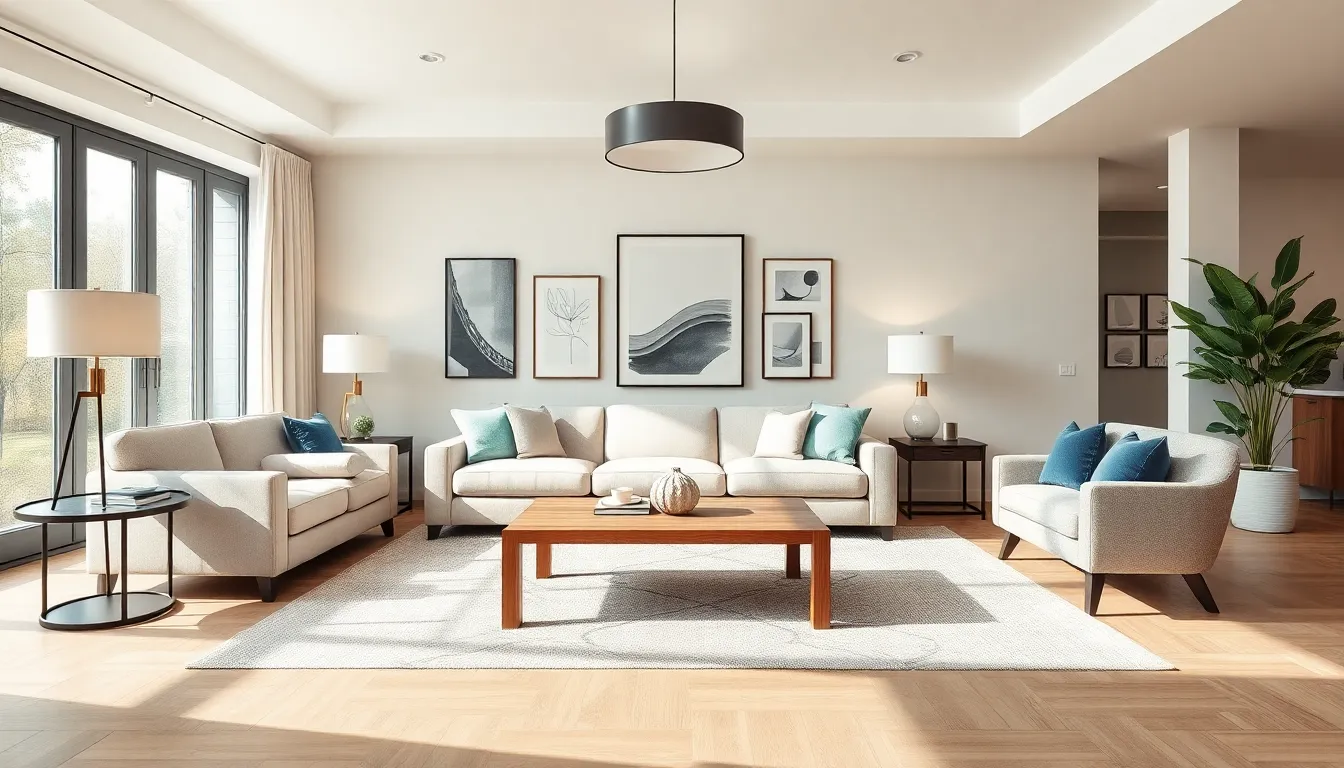
Furniture arrangement makes or breaks a living room’s functionality. The best layouts encourage conversation, create clear traffic paths, and establish visual balance. Most living rooms center around a focal point, typically a fireplace, television, or large window.
Consider Room Size and Shape
Small living rooms benefit from floating furniture away from walls. This creates an intimate seating area and makes the space feel larger. Large living rooms often need multiple zones. A reading nook in one corner and a main seating area near the television works well in spacious homes.
L-shaped living rooms require creative solutions. Position the sofa to define separate areas. Use rugs to anchor each zone visually.
Create Conversation Areas
Seating should allow people to talk comfortably without shouting. Arrange sofas and chairs facing each other, with no more than eight feet between them. Pull furniture toward the center of the room rather than pushing everything against walls.
Leave Room for Movement
Traffic flow matters in any living room design. Leave at least three feet for main walkways and 18 inches between the coffee table and sofa. Doors should open freely without hitting furniture. Walk through the space and test different arrangements before committing.
Many designers sketch floor plans or use online room planning tools. This saves time and prevents costly mistakes when purchasing furniture for living rooms.
Select a Cohesive Color Scheme
Color sets the mood for any living room. A cohesive palette ties furniture, walls, and accessories together into a unified look. The 60-30-10 rule provides a simple framework for balanced color distribution.
This rule works as follows:
- 60% dominant color: Walls and large furniture pieces
- 30% secondary color: Accent chairs, curtains, and rugs
- 10% accent color: Throw pillows, artwork, and decorative objects
Choose Colors That Support the Room’s Function
Cool blues and greens create calming living rooms perfect for relaxation. Warm yellows and oranges energize a space and encourage conversation. Neutral palettes offer flexibility and timeless appeal.
Consider the room’s natural light when selecting colors. North-facing living rooms receive cooler light and benefit from warm tones. South-facing spaces can handle cooler colors without feeling cold.
Test Before Committing
Paint samples look different in stores than they do at home. Purchase small containers and apply test patches on multiple walls. Observe how colors change throughout the day as light shifts.
For those designing living rooms on a budget, changing paint color delivers maximum impact for minimal cost. A fresh coat transforms the entire feeling of a space.
Incorporate Lighting and Accessories
Lighting serves both functional and decorative purposes in living rooms. A layered lighting approach combines ambient, task, and accent sources for flexibility throughout the day.
Three Types of Living Room Lighting
Ambient lighting provides overall illumination. Ceiling fixtures, recessed lights, or chandeliers typically serve this role. Dimmer switches add versatility.
Task lighting supports specific activities like reading. Floor lamps beside chairs and table lamps on end tables fall into this category.
Accent lighting highlights architectural features or artwork. Picture lights, track lighting, and uplights create visual interest and depth.
Most living rooms need at least three to five light sources. This creates options for different moods and activities. Bright ambient light works for cleaning, while softer task and accent lighting suits evening relaxation.
Accessorize With Intention
Accessories add personality to living rooms without requiring major investment. Group decorative objects in odd numbers, threes and fives look more natural than even groupings. Vary heights and textures within each arrangement.
Throw pillows and blankets introduce color and pattern while adding comfort. Rotate these seasonally for a fresh look. Plants bring life to any living room and improve air quality.
Wall art anchors the room visually. Hang pieces at eye level, typically 57 to 60 inches from the floor to the center of the artwork. Gallery walls work well in living rooms with high ceilings or large blank walls.