Table of Contents
ToggleLiving room tips can transform an ordinary space into the heart of a home. This room serves multiple purposes, it’s where families gather, guests relax, and everyday life unfolds. A well-designed living room balances style with function. It looks good and works even better.
The challenge? Creating a space that reflects personal taste while meeting practical needs. Too much furniture makes a room feel cramped. Poor lighting creates a dull atmosphere. Clutter steals visual appeal. But with the right approach, anyone can design a living room that feels both inviting and organized.
This guide covers essential living room tips for furniture placement, lighting, color selection, storage, and decor. Each section offers actionable advice to help homeowners make smart design choices.
Key Takeaways
- Arrange furniture around a focal point and create distinct zones to maximize both function and flow in your living room.
- Layer ambient, task, and accent lighting at different heights to add depth and control mood throughout the day.
- Use neutral base colors with one or two accent colors, and mix textures like leather, wood, and woven fabrics for visual richness.
- Incorporate hidden storage in furniture pieces like ottomans and coffee tables to keep clutter out of sight.
- Add personal touches through meaningful art, plants, and collected objects—but leave negative space to let featured items shine.
- These living room tips help balance style with practicality, creating a space that looks inviting and works for everyday life.
Choose the Right Furniture Layout
Furniture layout determines how a living room feels and functions. A poor arrangement blocks traffic flow and wastes valuable square footage. A smart layout creates conversation areas and makes the space feel larger.
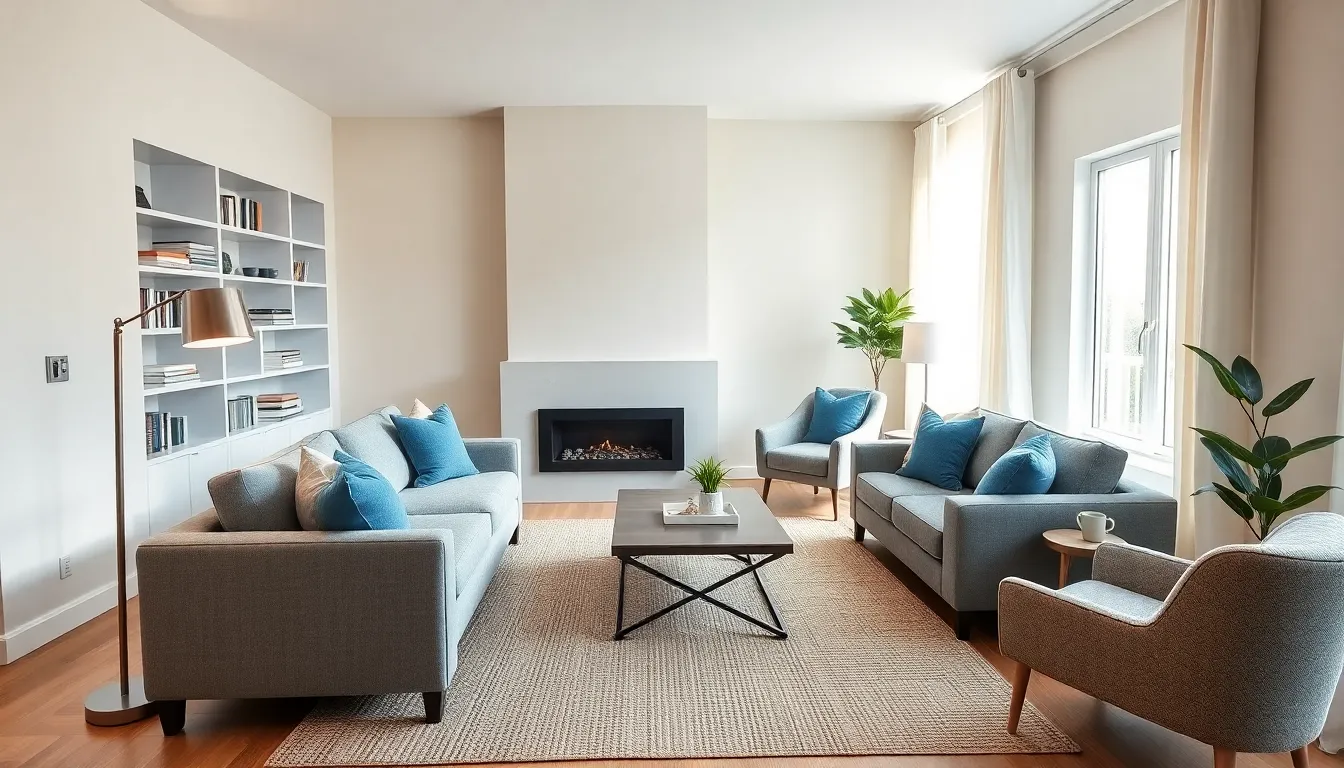
Start by identifying the room’s focal point. This might be a fireplace, large window, or entertainment center. Arrange the main seating, typically a sofa, to face this focal point. Then position secondary seating pieces at angles that encourage conversation.
One of the most useful living room tips involves creating zones. In larger rooms, define separate areas for different activities. A reading nook near a window works well. A media area around the TV serves another purpose. Each zone should feel distinct yet connected to the overall design.
Leave adequate walking paths between furniture pieces. Aim for at least 30 inches of clearance in main traffic areas. Coffee tables should sit 14 to 18 inches from the sofa for easy reach.
Don’t push all furniture against the walls. Floating furniture pieces toward the center creates a more intimate atmosphere. This approach works especially well in open floor plans where the living room connects to other spaces.
Consider scale when selecting pieces. Oversized furniture overwhelms small rooms. Undersized pieces look lost in large spaces. Measure the room and furniture dimensions before purchasing.
Maximize Natural Light and Lighting Options
Lighting affects mood, perception of space, and overall comfort. Living room tips for lighting focus on layering different light sources to create depth and flexibility.
Natural light should take priority. Keep windows unobstructed when possible. Choose lightweight curtains or blinds that filter sunlight without blocking it entirely. Position mirrors across from windows to bounce light deeper into the room.
Artificial lighting works in three categories: ambient, task, and accent. Ambient lighting provides general illumination, think overhead fixtures or recessed lights. Task lighting serves specific activities like reading. Accent lighting highlights artwork or architectural features.
A single overhead light creates harsh shadows and flat atmospheres. Instead, combine multiple sources at different heights. Floor lamps add warmth in corners. Table lamps provide focused light near seating. Wall sconces offer subtle accent illumination.
Dimmer switches give control over light intensity throughout the day. Bright light energizes morning activities. Softer light creates relaxing evening ambiance.
LED bulbs offer energy efficiency and come in various color temperatures. Warm white (2700K-3000K) suits living rooms best. This temperature mimics natural daylight and flatters skin tones.
Select Colors and Textures That Set the Mood
Color choices influence how people feel in a space. Living room tips for color selection balance personal preference with psychological effects.
Neutral base colors offer versatility. Whites, grays, and beiges create calm backgrounds that accommodate changing decor. They also make rooms appear larger and brighter.
Accent colors add personality and visual interest. Blues promote relaxation. Yellows energize. Greens connect spaces to nature. Choose one or two accent colors and repeat them throughout the room in pillows, artwork, and accessories.
Texture adds dimension that color alone cannot achieve. Mix smooth and rough surfaces. Pair sleek leather with woven textiles. Combine polished wood with soft fabrics. This variety keeps the eye moving and creates visual richness.
Rugs anchor furniture groupings and introduce pattern and texture underfoot. Choose a rug large enough that front furniture legs rest on it. This visually connects seating pieces.
Throw pillows and blankets offer easy ways to experiment with color and texture. They’re inexpensive to swap seasonally or when tastes change. Layer different sizes, shapes, and fabrics for a collected look.
Incorporate Storage Solutions to Reduce Clutter
Clutter destroys the appeal of even well-designed spaces. Effective living room tips address storage from the planning stage, not as an afterthought.
Built-in shelving maximizes vertical space and provides display areas for books and decorative objects. Closed cabinets hide items that don’t deserve visual attention, remotes, chargers, and magazines.
Furniture with hidden storage serves double duty. Ottomans with lift-top lids store blankets. Coffee tables with shelves or drawers contain everyday items. Media consoles organize electronics and gaming equipment.
Baskets and decorative boxes corral smaller items while adding texture. Place them on open shelves or under console tables. Label them for quick identification.
Edit belongings regularly. Living rooms accumulate items that no longer serve a purpose. Remove what doesn’t belong. Store seasonal items elsewhere. Keep surfaces mostly clear to maintain visual calm.
Create designated spots for daily-use items. Remote controls go in a specific tray. Keys hang on hooks by the door. Books return to shelves. These habits prevent clutter from building up.
Add Personal Touches and Decor Accents
Personal touches transform generic spaces into meaningful homes. Living room tips for decor focus on authenticity over trends.
Art reflects personality and creates conversation starters. Choose pieces that evoke genuine emotional responses rather than matching color schemes. A single large piece makes more impact than several small ones clustered awkwardly.
Photographs displayed in cohesive frames tell family stories. Create gallery walls with consistent spacing and frame styles. Or rotate images in a few select frames.
Plants bring life and color to any room. They purify air and connect indoor spaces to nature. Low-maintenance options like pothos, snake plants, and ZZ plants thrive in typical indoor conditions.
Books displayed with intention show interests and invite exploration. Organize by color for visual impact or by subject for practical access. Stack a few horizontally to create varying heights.
Collected objects from travels or hobbies personalize spaces authentically. Group similar items in odd numbers, threes and fives look more natural than pairs. Vary heights within groupings for visual interest.
Avoid the temptation to fill every surface and wall. Negative space gives the eye rest and highlights featured items. Quality beats quantity every time.