Table of Contents
ToggleSecurity cameras have come a long way from fixed-angle lenses that leave blind spots everywhere. A 360 home security camera eliminates those dead zones, offering full panoramic coverage from a single unit. Whether you’re monitoring a large backyard, a front porch, or an interior room, these cameras capture everything in a sweeping view, no panning, no guessing, no gaps. For homeowners looking to simplify their security setup without mounting multiple cameras, a 360-degree model delivers serious value. This guide walks through what these cameras actually do, where they shine, and how to install one yourself without calling in a pro.
Key Takeaways
- A 360 home security camera eliminates blind spots by capturing panoramic coverage from a single unit, either through fisheye lenses or motorized pan-tilt-zoom mechanisms.
- Choosing between fisheye models for continuous recording or PTZ cameras for active tracking depends on your property layout and whether you need static wide coverage or dynamic motion-following capabilities.
- Resolution of 4MP or higher is essential for 360 security cameras to avoid pixelation when zooming into details like faces or license plates.
- Proper installation includes using secure mounting templates, weatherproof cable management, correct power source placement, and Wi-Fi signal verification to ensure reliable operation.
- A 360 camera typically costs $150–$400 and can replace three to four traditional fixed cameras, offering better cost savings and simplified management for homeowners.
What Is a 360 Home Security Camera and How Does It Work?
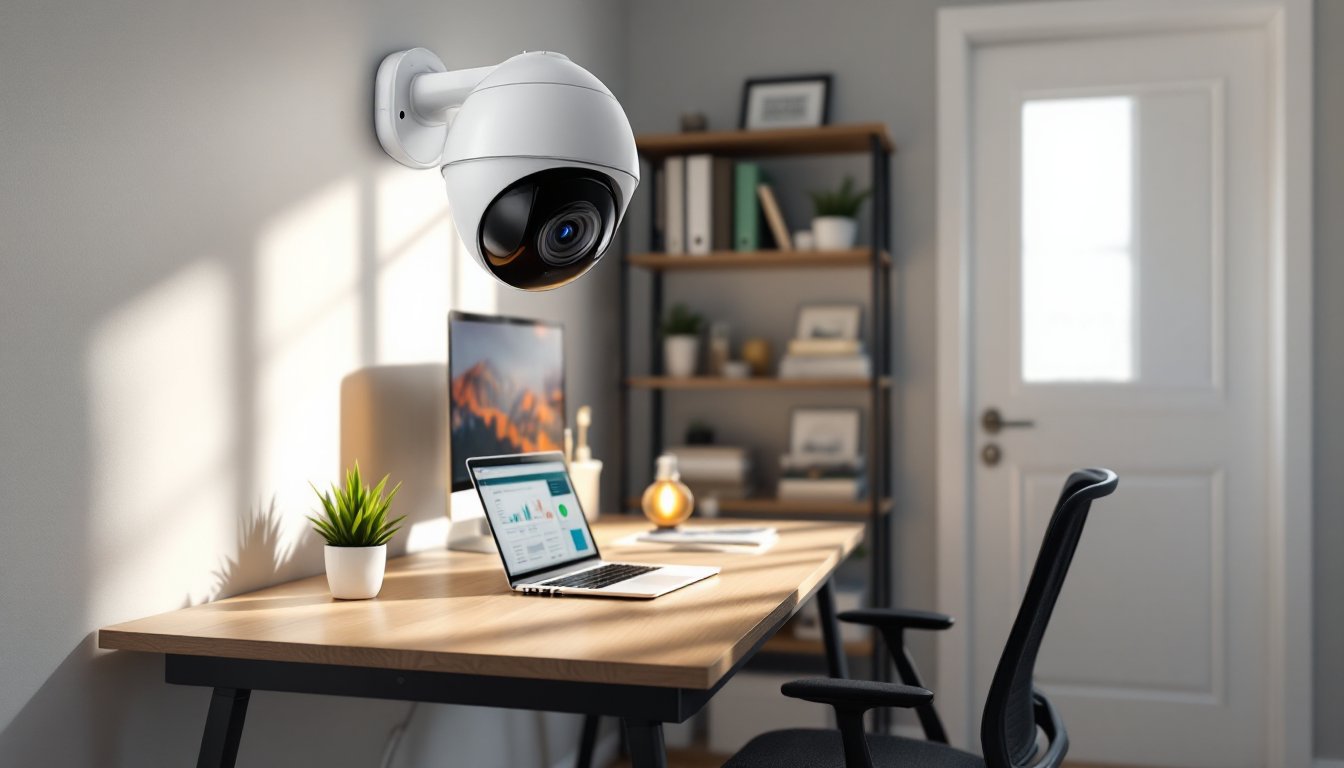
A 360-degree security camera uses either a fisheye lens or a motorized pan-tilt-zoom (PTZ) mechanism to capture a complete circular view. Fisheye models record everything at once in a single ultra-wide frame, then use software to “de-warp” the image into usable footage. PTZ cameras physically rotate to cover the full radius, often following motion or allowing manual control through an app.
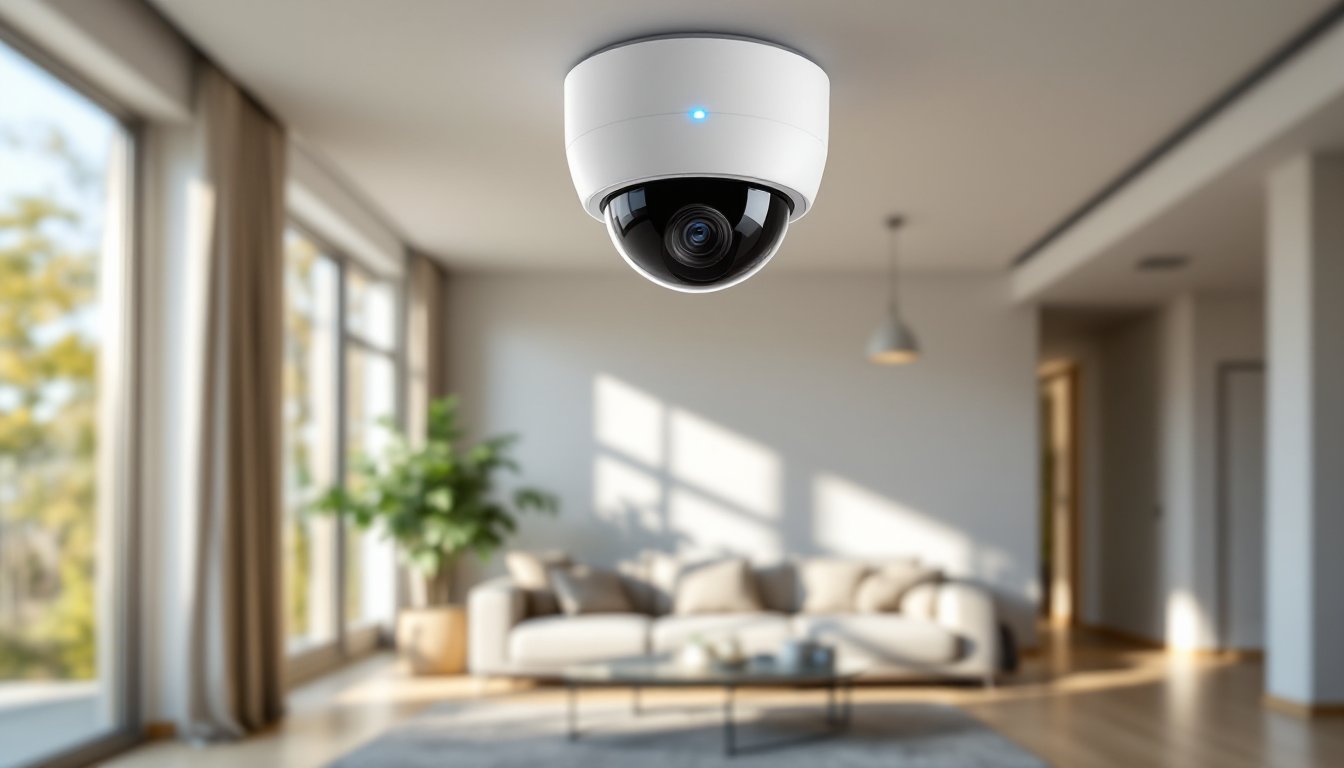
Fisheye units mount flush to ceilings or walls and provide continuous 360-degree recording without moving parts, which means fewer mechanical failures. The downside? Image quality at the edges can suffer from distortion, and zooming into distant details often results in pixelation.
PTZ cameras, on the other hand, deliver sharper zoomed-in footage because they’re not stretching a single wide image. They track movement automatically and can cover large outdoor areas effectively. The trade-off is that they only point one direction at a time, if someone enters the scene behind the lens while it’s focused elsewhere, that moment goes unrecorded unless the camera is set to sweep continuously.
Most 360 cameras connect via Wi-Fi, though some outdoor models offer Power over Ethernet (PoE) for more stable connections and uninterrupted power. Cloud storage and local SD card options are common, with resolution ranging from 1080p to 4K depending on the model. Check the camera‘s field of view specs: true 360-degree coverage is different from a 180-degree panoramic lens.
Key Benefits of Installing a 360 Security Camera in Your Home
The biggest advantage is fewer cameras, more coverage. Instead of wiring three or four fixed cameras to monitor a yard or room, one 360 unit handles the entire space. That cuts down on installation time, cable runs, and the number of devices pulling bandwidth from your network.
Blind spots vanish. Traditional cameras point in one direction, leaving corners, doorways, and side areas unmonitored. A 360 camera captures the full perimeter, which is especially useful in entryways, garages, or anywhere intruders might approach from multiple angles.
Cost savings add up. While a quality 360 camera typically runs $150 to $400, buying multiple fixed-angle cameras with similar specs often exceeds that budget once you factor in mounts, additional power supplies, and expanded cloud storage plans.
Real-time tracking is smoother with PTZ models. Many can follow a person or vehicle as it moves through the frame, keeping the subject centered and in focus. That’s harder to achieve with static cameras unless you’re manually switching between feeds.
Indoor use shines with fisheye models. Mount one on the ceiling of a playroom, workshop, or basement, and you’ve got a bird’s-eye view of the entire space. It’s also harder for someone to disable a ceiling-mounted camera compared to a wall-mounted unit within arm’s reach.
Essential Features to Look for When Choosing a 360 Camera
Resolution matters more than you’d think. A 1080p fisheye camera spreads those pixels across a massive field of view, so zooming in on a person’s face or a license plate often turns the image into a blur. Look for 4MP (2560×1440) or higher if you need usable detail at a distance. For PTZ cameras, 1080p is often sufficient since the lens zooms optically rather than digitally.
Night vision range varies widely. Infrared LEDs are standard, but effective range can be anywhere from 30 feet to 100+ feet. If you’re covering a large driveway or backyard, confirm the IR distance matches your space. Some models add color night vision using ambient light or built-in spotlights, which helps with identifying clothing or vehicle colors in low light.
Weather resistance (IP rating) is non-negotiable for outdoor installs. An IP65 rating handles rain and dust: IP66 or IP67 adds protection against heavy spray and temporary submersion. Don’t mount an indoor-rated camera outside and expect it to survive a Midwest winter.
Two-way audio lets you communicate through the camera’s built-in speaker and mic, useful for telling a delivery driver where to leave a package or scaring off a porch pirate. Audio quality varies: cheaper models sound like a drive-thru intercom.
Smart integration with Alexa, Google Assistant, or Apple HomeKit allows voice control and integration with other smart home devices. Check if the camera works with your existing ecosystem before buying.
Local storage vs. cloud is a decision point. SD card slots (up to 256GB or more) let you record without monthly fees, but if the camera is stolen or damaged, so is the footage. Cloud storage keeps recordings off-site but usually requires a subscription after a trial period. Many wireless home security cameras offer both options for flexibility.
Best Locations to Install Your 360 Security Camera
Ceiling mounts in central rooms maximize fisheye camera coverage. A camera mounted in the center of a garage, mudroom, or open-plan living area captures the entire space without obstructions. Avoid placing it too close to walls or in a corner, you’ll waste half the field of view.
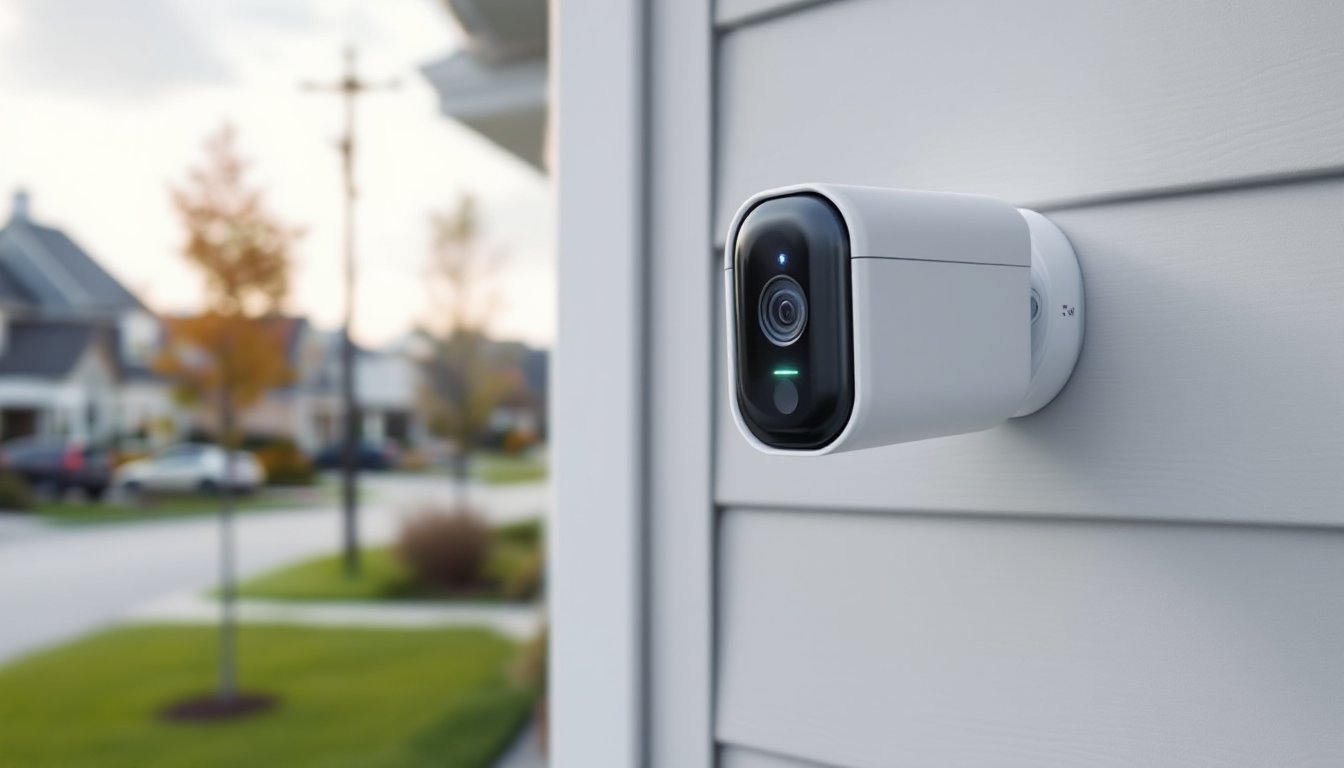
Outdoor PTZ cameras work best at elevated corners where they can sweep across driveways, yards, or side gates. Mount 8 to 12 feet high to stay out of easy reach but low enough to capture facial details. Higher isn’t always better: mounting at 15+ feet can make it hard to identify someone’s features.
Front porches and entry points benefit from 360 coverage because visitors approach from different angles, walking up steps, stepping off a sidewalk, or coming from a driveway. A single camera positioned above the door handles all approaches.
Backyards and patios are prime candidates for PTZ models. These areas often have multiple access points, gates, sliding doors, fence lines, and a motorized camera can track movement across all of them. Make sure the camera’s motion detection zones are properly configured to avoid constant alerts from tree branches or passing cars beyond your property line.
Avoid aiming cameras directly at bright light sources (street lamps, floodlights, or windows reflecting sunlight). Glare and backlight wash out the image, making it useless for identifying details. Position the camera so key areas are evenly lit or rely on the camera’s IR night vision rather than external lighting.
DIY Installation Tips for Homeowners
Most 360 cameras come with mounting templates, use them. Hold the template against the wall or ceiling, mark screw holes with a pencil, then drill pilot holes to prevent cracking drywall or splitting wood trim. For ceiling mounts on drywall, use toggle bolts or ceiling anchors rated for at least twice the camera’s weight. Cameras aren’t heavy (usually under 2 pounds), but vibration from a PTZ motor or wind load on an outdoor unit adds stress over time.
Wire management matters. If you’re running power cable through an attic or along exterior walls, use weatherproof cable clips and avoid sharp bends that can damage the jacket. For PoE installs, you’ll need a PoE injector or switch and Cat5e or Cat6 cable. Don’t splice Ethernet cable, use couplers if you need to extend a run, and keep total length under 328 feet to avoid signal degradation.
Power source placement: Battery-powered 360 cameras are rare because of the energy draw from motors and Wi-Fi. Most require either a standard 120V outlet or low-voltage wiring. If mounting outdoors and an outlet isn’t nearby, consider hiring an electrician to install a weatherproof GFCI outlet, this isn’t a DIY job unless you’re comfortable working with household wiring and local electrical codes (usually NEC Article 210 for outdoor receptacles).
Align the camera before tightening all screws. Connect it to your phone app, check the live view, and adjust the angle. For fisheye models, even a few degrees off-center changes what’s in frame. PTZ cameras often have a “home” position, set that to cover the most critical area when idle.
Wi-Fi signal strength is crucial. If the camera is more than 30 feet from your router or separated by brick/metal, expect dropouts. Use a Wi-Fi extender or mesh network node nearby. Most outdoor security cameras perform better on the 2.4 GHz band for range, even though 5 GHz is faster: the 2.4 GHz signal penetrates walls more effectively.
Safety first: Always wear safety glasses when drilling overhead, especially into a ceiling. Dust, drywall chunks, and metal shavings fall directly into your face. If you’re on a ladder, have someone steady it. For outdoor installs above 10 feet, rent scaffolding or call a pro, roof edges and tall ladders are where DIYers get hurt.
360 Cameras vs. Traditional Security Cameras: Which Is Right for You?
Traditional fixed cameras excel when you need high-detail footage of a specific zone, a doorway, a cash register, or a narrow hallway. They focus all their resolution on one area, so image quality is sharp and zooming in doesn’t degrade detail as much. If you know exactly where trouble is likely (a back door that’s been targeted before, a side gate with previous break-in attempts), a fixed 4K camera pointed right at it will outperform a 360 model.
360 cameras shine in open, multi-directional spaces where threats or activity can come from anywhere. They’re ideal for homeowners who want simplicity, one device, one app, one set of alerts. You won’t need to guess which camera caught an event or flip through multiple feeds.
Cost and complexity scale differently. A three-camera traditional setup with a dedicated NVR (network video recorder) and wired PoE connections offers more reliability and storage, but installation is more involved. A single 360 camera with cloud storage is faster to set up and easier to manage, but you’re dependent on your internet connection and subscription fees.
PTZ cameras require more configuration. You’ll spend time setting motion zones, patrol paths, and sensitivity levels. Fixed cameras are often set-and-forget once the angle is right. For DIYers who want to install and move on, a fisheye 360 or a set of fixed cameras wins over a PTZ that needs tweaking.
Consider the layout of your property. If you have a long, narrow driveway, a fixed camera at the street and another at the garage may cover it better than a single 360 trying to stretch across the distance. If you have a square backyard with a patio, pool, and multiple entry points, a 360 PTZ mounted centrally can track everything. Many homeowners combining both for layered coverage, 360 cameras for wide-area monitoring and fixed cameras for high-priority choke points like doors and windows. Reviews of the best outdoor security cameras often highlight this hybrid approach.
Conclusion
A 360 home security camera simplifies coverage, reduces equipment clutter, and eliminates blind spots that fixed cameras leave behind. Whether you choose a fisheye model for continuous recording or a PTZ for active tracking, the right placement and setup make all the difference. DIY installation is manageable for most homeowners with basic tools and a methodical approach, just respect electrical work, secure your mounts properly, and test your Wi-Fi strength before drilling holes.